November 28
Falls on a Tuesday or Wednesday: you rest the Monday before. On a Thursday or Friday: the Monday after. The law calls it automatic. In 2026 it is a Saturday, so nothing moves.
Your visa is the paperwork. Daily life is everything else: which days the country stops, how people pay each other, how you get across town, what the law says when you rent a home and what your neighbour means by “ahorita”.
Here it is, one thing at a time, with the rule or the official source behind every fact.
Article 46 of the Labour Code sets twelve days off a year for everyone, in private jobs as well as in government: nine national celebrations and three days of national mourning. There is one more in the year a new president takes office. Four of the twelve fall in November.
November tells the story of the country in four days off: the first cry against Spain in a town of Azuero in 1821, the independence that followed, and the separation from Colombia in 1903. Two more days around them are not days off by law, but many public offices close. If you have an appointment at Immigration or a notary in November, check the date first.

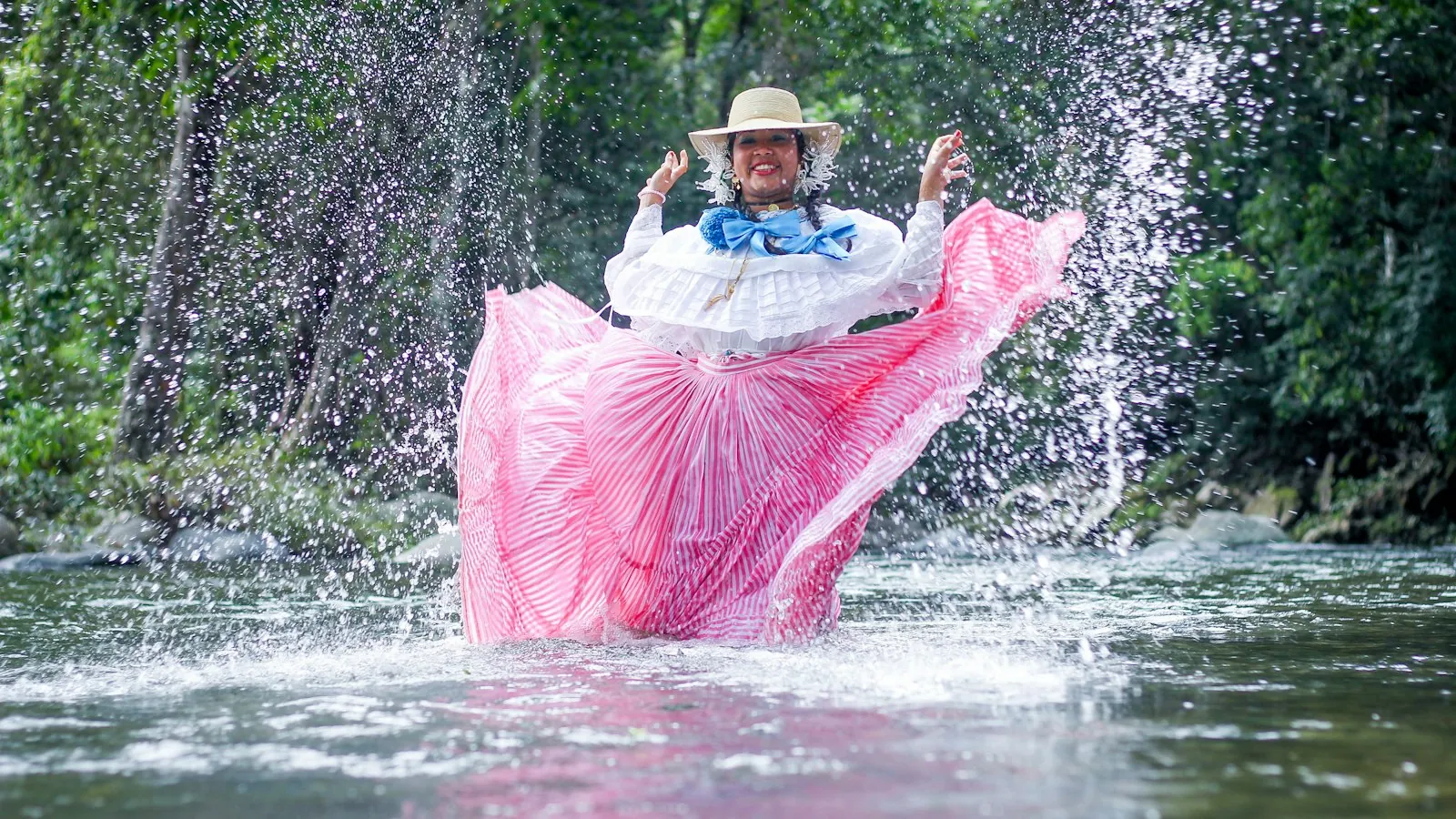
The pollera, Panama’s traditional dress
Photo: Elvis A. Mora· Unsplash· Unsplash License
| Date | 2026 | What it marks | Kind |
|---|---|---|---|
| January 1 | Thursday | New Year’s Day | Celebration |
| January 9 | Friday | The events of January 9, 1964, over the flag in the Canal Zone | Mourning |
| Carnival Tuesday | February 17 | Carnival | Celebration |
| Good Friday | April 3 | Holy Week | Mourning |
| May 1 | Friday | Labour Day | Celebration |
| November 3 | Tuesday | Separation from Colombia, 1903 | Celebration |
| November 5 | Thursday | Colón Day, 1903 | Celebration |
| November 10 | Tuesday | First Cry of Independence, 1821 | Celebration |
| November 28 | Saturday | Independence from Spain, 1821 | Celebration |
| December 8 | Tuesday | Mother’s Day | Celebration |
| December 20 | Sunday | The victims of the 1989 invasion | Mourning |
| December 25 | Friday | Christmas Day | Celebration |
Falls on a Tuesday or Wednesday: you rest the Monday before. On a Thursday or Friday: the Monday after. The law calls it automatic. In 2026 it is a Saturday, so nothing moves.
Always on its own date. It used to move to a Monday until Law 118 of 2013 fixed it.
The government may join other holidays to a weekend by decree, moving them to a Monday. The original date becomes a working day. These decrees come out shortly before, so check the news that week.
We found no rule that moves a holiday that falls on a Sunday, like December 20 in 2026.
Private banks decide for themselves whether to open on a national holiday, under a rule of the Superintendency of Banks, so check your branch.
Panama uses the US dollar and has no banknotes of its own. Prices are written in balboas, worth exactly one dollar each. Day to day, people pay each other by phone with Yappy, which only works linked to your own account at a Panamanian bank.
Legal tender in Panama since a monetary agreement with the United States signed on June 20, 1904.
The Constitution forbids paper money of compulsory circulation. The State does mint coins, in balboas.
B/. 5.00 means five dollars. In your change, US and Panamanian coins of the same size and value travel together.

Casco Viejo, Panama City
Photo: Azzedine Rouichi· Unsplash· Unsplash License
Yappy is the phone payment you will hear about first. It moves dollars from one mobile number to another: to a friend, to the plumber, to the stall that sells you mangoes. Banco General says more than 34,000 businesses accept it. It is run by Yappy, S.A., a company that is not a bank: your money stays in your own bank account and Yappy only moves it.
Yappy only works linked to an account in your own name, and it checks that you are the holder.
Its terms publish no rule about foreigners without a Panamanian ID card: what decides is whether your bank opens the account.
In your bank’s own app or in the Yappy app, depending on the bank, see the table.
Type the number or pick a contact, enter the amount in dollars and send.
| Bank | Where you sign up |
|---|---|
| Banco General | The bank’s own app |
| St. Georges Bank | The bank’s own app |
| Banisi | The bank’s own app |
| Banistmo | Yappy app or the bank’s app |
| Caja de Ahorros | Yappy app |
| Credicorp Bank | Yappy app |
| Davivienda | Yappy app |
| MetroBank | Yappy app |
Everything above starts here. The rule for banks changed in 2026: Acuerdo 1 of the Superintendency of Banks, which replaced Acuerdo 10 of 2015, makes the passport the identity document for a foreign client, with copies of the photo page and of the entry stamp. A foreign resident may use the residence card or the E cédula instead. Every foreign client also gives the tax number of the country where he pays taxes, and the bank needs proof of income, such as a pension statement. The rule asks for no bank reference letter; if a bank wants one, that is its own policy.
| Bank | For a foreigner | To open |
|---|---|---|
| Banco General | Passport or E cédula, a link with Panama if you have no cédula, proof of income | From US$1 |
| Banistmo | Non-resident: original passport with the entry stamp; proof of income as assessed; branch only | US$10 |
| BAC | Passport and an Immigration card or work permit, proof of income | US$50 |
| Caja de Ahorros | Passport or E cédula, provisional Immigration card, proof of income, a lease and a utility bill in your name | US$100 for foreigners |
| Banco Nacional | Ask at a branch: the requirements are given in person | B/. 5,000 for foreigners |
Tapping your phone at the till is normal in Panama. Apple and Google both list Panama among the countries where their wallets work, and Panamanian banks have signed up one by one. Visa has told the press that most in-person card payments here are now contactless, though its figures measure different things and are not published on its own site. The Metro takes contactless Visa and Mastercard cards at the turnstiles, and since 2024 phones too; leave with the same card or phone you came in with.
| Bank | Apple Pay | Google Pay |
|---|---|---|
| Banco General | Visa and Mastercard, credit and debit | All Visa credit cards; Mastercard and Visa debit coming |
| BAC | Listed by Apple | Credit and debit cards |
| Caja de Ahorros | - | Visa and Mastercard, credit and debit; purchases only |
| Global Bank | - | Credit cards |
| Credicorp Bank | - | Credit, debit and prepaid |
| St. Georges Bank, Banesco, Ficohsa, CMF | Listed by Apple | - |
Tipping is voluntary by law. A restaurant may suggest one, usually 10 percent, but the bill must show the total without it and the suggested tip on a separate line. A compulsory tip is only allowed for services contracted in advance, like a catered party. If you are charged one anyway, you can complain to Acodeco, the consumer protection authority, with your receipt.
Keep some cash for markets, small fondas, taxis and the “biencuidado”, the man who watches parked cars for a coin. We found no official figure on how many shops take cards.
Fonda example · B/.
Sancocho6.50
Patacones3.00
Chicha de tamarindo2.50
Total12.00
Suggested tip, 10 %1.20
With tip13.20
Panama City has two Metro lines and a branch to Tocumen airport. A Line 1 ride costs B/. 0.35, or B/. 0.24 for retirees and pensioners with a personalized card. Long distance buses leave from Albrook, next to the first Metro station, and small planes fly to David, Bocas del Toro and Chitré.
Line 1
14 stations · about 16 km · about 26 minutes
Starts at the national bus terminal
Line 2
16 stations · 21 km, elevated
Change here from Line 1
Airport branch
A train every 10 minutes
Then a bus to Terminals 1 and 2

Panama City from Cerro Ancón
Photo: Envato Elements· Envato Elements· Envato Elements license
| Ticket | Price | Note |
|---|---|---|
| Line 1 ride | B/. 0.35 | Executive Decree 367 of 2014 |
| Line 1 ride, retirees, pensioners, seniors and people with disabilities | B/. 0.24 | Needs a personalized card |
| Metro card | US$2.00 | From the machines at any station |
| Ride using both lines, to the airport | US$0.85 | Airport guide of March 2023 |
Top up the card at the station machines or at outside top-up points; the Metro also takes the MetroBus and RapiPass cards. At the turnstiles with the Visa and Mastercard logos you can just tap a contactless bank card.
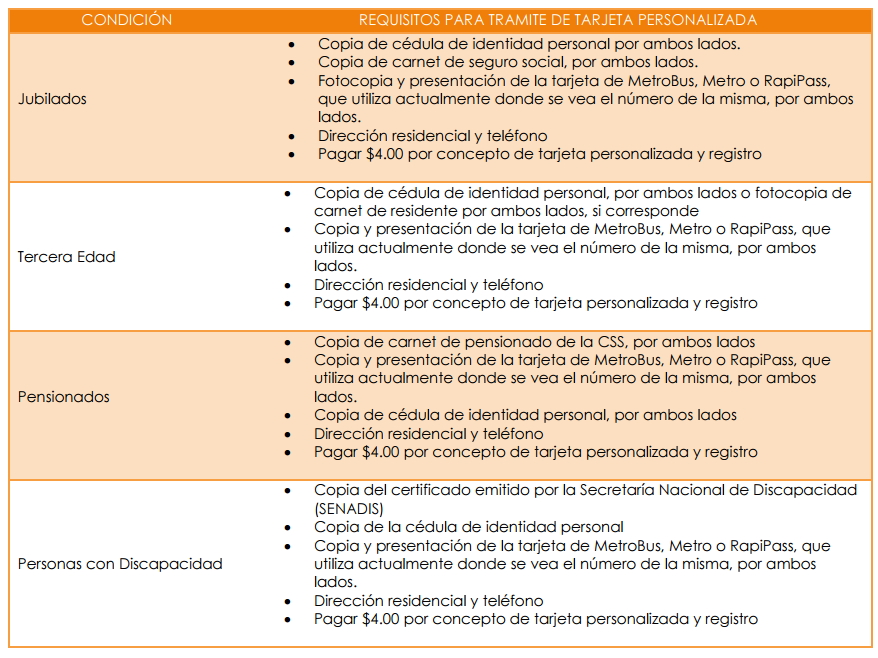
The B/. 0.24 fare needs a personalized card, which costs US$4.00 with its registration. Bring a copy of your current Metro, MetroBus or RapiPass card with its number showing, and your address and phone number. What else you bring depends on how you qualify:
The city buses run on a card too, bought empty at sales points and topped up at ticket offices or from your online banking. One tap lets you travel for 150 minutes in total, with two free transfers, 24 hours a day. MiBus publishes a school fare but no fare for retirees, pensioners or seniors.
Ride towards Nuevo Tocumen and get off at Corredor Sur.
Change trains. One leaves every 10 minutes.
At Aeropuerto station, a bus takes you to Terminals 1 and 2.
The national bus terminal is at Albrook, by the first station of Line 1, so you can arrive by Metro with your bags. Buses leave for David, Bocas del Toro, Santiago, Penonomé, El Valle de Antón, Las Tablas and most towns of the interior. We found no official timetable for the terminal, so ask at each company’s counter.
We could not read an official taxi fare table: the Transit Authority’s fare lookup was not reachable from outside its network when we checked. Ask the fare before you get in. In March 2026 the Authority said no fare increase is allowed and any unilateral increase has no legal value; complaints go to 311. The rules for ride apps such as Uber and InDrive are being rewritten: a 2026 decree on them was repealed four days later, so we cannot tell you their legal status today.
Two operators publish their own fares and times. The Maritime Authority checks each boat’s sailing permit and safety certificate, but it publishes no list of authorized operators, and other boats, such as Barcos Calypso from La Playita, have no published timetable.
Taboga
Taboga Express, from the Fuerte Amador shopping centre on the Amador Causeway
From Amador 8:00, 9:30 and 11:00 a.m. and 3:30 p.m.; extra 5:00 p.m. on weekends and holidays
About 30 minutes
Contadora
Sea Las Perlas, offices on Isla Flamenco and at Albrook Mall
Daily, out 7:30 a.m., back 3:30 p.m.
| Airline | From | Scheduled flights to | Charter only |
|---|---|---|---|
| Air Panama | Albrook, Marcos A. Gelabert | David, Changuinola, Isla Colón, Bocas del Toro, Chitré | Contadora, Pedasí, Guna Yala, Isla San José, Bahía Piña, Jaqué, Puerto Obaldía |
| Copa Airlines | Tocumen | David | - |
Leases follow Law 93 of 1973. For new leases of homes, most of it gave way to what the parties agree in 1995, but some rules still protect every tenant: a written lease filed with the Housing Ministry, a one-month deposit lodged with the State, the right to leave early with 30 days’ notice, and no landlord may turn you down for your nationality or your age.
Law 93 of 1973 governs leases and created the Directorate of Leases of the Housing Ministry, MIVIOT. In 1995, Executive Decree 7 took new leases of vacant private homes out of most of that law and left them to what you and the landlord agree. Only articles 4, 5, 6, 7, 8, 10, 13, 16, 19, 65, 66 and 68 still apply to them, and the Supreme Court upheld the decree in 2000. So for many terms, your contract is the rule: read it slowly.

Casco Viejo waterfront, Panama City
Photo: Ignacio Hernandez· Unsplash· Unsplash License
On the Directorate of Leases form.
The landlord files a copy with the Housing Ministry within five business days. If not, he faces a sanction, but the lease stands.
Lodged with the State, not kept by the landlord.
At any time, with at least 30 calendar days’ written notice.
Not for nationality, age, race, sex, marital status, belief or for having children.
A sum equal to one month’s rent, as the law requires of every tenant.
Through Banco Nacional or Caja de Ahorros, not in the landlord’s pocket.
If the landlord claims it, he must prove unpaid rent or damage before the Directorate of Leases.
If he proves nothing, the deposit returns to you, with interest.
The length of the lease binds the landlord, not you. Give written notice at least 30 calendar days before you leave; without it, the landlord may keep part or all of the deposit. A dated, signed letter, with a copy you keep, is the safest way.
You can put the electricity, the water and a prepaid phone line in your name with your passport. Once you qualify, the law gives you 25 percent off electricity up to 600 kWh a month, off water up to B/. 30 of consumption, and off the fixed charge of one home phone line.
25%
On monthly consumption up to 600 kWh. Above that, the normal rate.
25%
On consumption up to B/. 30, for your home, with the account in your name.
25%
On the fixed charge of one residential line in your name. The law does not mention mobiles or internet.
The discounts are for Panamanians and foreign residents who are women of 55 or over or men of 60 or over, and for all retirees and pensioners.
Seven in ten occupied homes in Panama had internet in the 2023 census, but the share falls as you leave the capital. Mobile coverage reaches 96 percent of the population, yet only 68 percent of the territory: a beach house or a farm in the hills can sit in a gap. In the cities, fixed internet is fast; about a quarter of fixed connections are fibre, and most of the rest run on cable. Full commercial 5G has not launched: the regulator expects it at the end of 2026 or early 2027, and Más Móvil already offers a 5G layer on its 4G frequencies in most of Panama City, according to the press.
| Province | Homes with internet, 2023 | Where |
|---|---|---|
| Panamá | 80.4% | Panama City |
| Panamá Oeste | 78.2% | Coronado, partly |
| Chiriquí | 69.7% | Boquete, David, Volcán |
| Los Santos | 59.8% | Pedasí, Las Tablas |
| Coclé | 56.3% | El Valle, Coronado, partly |
| Bocas del Toro | 49.4% | Bocas town |
Our own division of two census tables: homes with internet over occupied homes.
| Service | Who | What a foreigner brings |
|---|---|---|
| Electricity | Naturgy or ENSA, depending on the area | Naturgy: valid passport or Immigration card, proof of ownership, or the owner’s cédula and your lease, and a guarantee deposit. ENSA: passports or cédulas of both people for a change of name; a good payment history or recent credit references can replace the deposit |
| Water | IDAAN, the national water company | The published requirements are for the owner: title deed or Public Registry certificate and the owner’s cédula or passport |
| Mobile phone | Tigo or Más Móvil | Tigo prepaid: your passport. Keeping your number when you change operator: your passport, and for a contract line your last bill paid |
Digicel switched off its network in April 2024, under a migration order of the telecom regulator, ASEP, so older guides that list it are out of date.
Customer Relations, ground floor of the IDAAN head office on Vía Brasil. The account holder goes in person.
Your last bill, a copy of your cédula and of your Social Security card, and your pension resolution if you are a pensioner.
The discount shows up on your bill about a month later.
Panama has a national post office, Correos y Telégrafos, but almost nobody lives by it: in 2025 it had 94 offices, fewer than 6,000 private post office boxes in use, and outside Panamá province it delivered barely a thousand items to homes all year. What people use instead is a “casillero”, a courier box with your own address in Miami.
Shipments worth up to B/. 100 enter without duties or taxes.
Of the 276,716 items the post office delivered to homes in 2025, 275,639 were in Panamá province. In Bocas del Toro, Coclé, Colón, Chiriquí and Darién it delivered none to homes, and Darién has no post office boxes at all. Postal codes are new: the post office and the census office launched a national system in May 2026, with a code for every home. So do not plan on letters reaching your door, and give your bank and pension office an email or a casillero address instead.
Free with most companies. You get an account number and a personal address in Miami.
Amazon, eBay, Walmart or any US store ships to your Miami address like any other order.
The courier flies or ships it to Panama and charges by weight, plus insurance and, if you want it, home delivery.
At a branch or at home, usually two to seven business days by air.
| Company | Air, per pound | Time by air | Note |
|---|---|---|---|
| Airbox | US$3.15 to US$5.15 in the city | 2 to 4 business days | Sea option from US$1.85 a pound; home delivery from US$1.50 |
| PGT Logistics | US$3.50, sales tax included | 2 to 3 business days | Free home delivery up to 25 pounds by air |
| Blue Cargo | B/. 2.50 to B/. 3.00 | 2 to 7 business days | Minimum B/. 4.00 to B/. 5.00 |
| Tracking Box | US$2.50 | 48 to 72 hours | No volume charge, they say |
| Tulogy | US$2.65 | 3 to 5 business days |
Prices published on each company’s site on October 26, 2026. Large parcels may be charged by volume, not weight.
Up to B/. 100
Small shipments of goods that are not restricted, valued at B/. 100 or less, pay no taxes.
B/. 100 to 2,000
The courier files the declaration through a customs broker and passes the taxes on to you. Sales tax on imports is 7 percent of the CIF value plus duties.
B/. 2,000 or more
Also anything restricted, whatever its value, such as weapons or dual-use goods.
Amazon lists Panama among the countries it ships to, and you pay the duties and taxes. Many US sellers do not ship abroad, which is why the casillero is the usual route; couriers list Amazon and Shein among the shops people use with their Miami address. We could not confirm that Temu ships directly to Panama.
There is no Apple Store in Panama. Apple’s own locator lists 94 resellers, all third parties, and 59 of them are in Panamá province; of its 8 authorized repair centres, 6 are in Panama City, one in Colón and one in David. If you live in Boquete, Pedasí or Bocas, a repair or a special model usually means a trip to the city or an order through a casillero, so bring a spare charger and think twice before arriving with a device you cannot service here.
Panamanian Spanish has its own words, and some came from English: “fren” is a friend and “priti” is pretty. Start with “usted”, and remember that “ahorita” means in a while, not right now.
In the towns of the interior people say “usted” more often than in the capital, even with friends and family; in Panama City both forms live side by side. The easy rule: start with usted, and follow the other person when they switch.

The main square of Las Tablas, Los Santos
Photo: SportingVVE· Wikimedia Commons· CC0
Twelve days off a year set by article 46 of the Labour Code: nine national celebrations and three days of national mourning, plus the day a new president takes office in an election year.
No. November 4, Flag Day, is not in article 46 of the Labour Code, although many public offices close. November 3, 5, 10 and 28 are days off.
Yes. The US dollar has been legal tender in Panama since 1904, and Panama has no banknotes of its own. Prices in balboas, B/., are the same amount in dollars.
Yappy works only linked to a bank account in your own name at one of eight Panamanian banks. Its terms publish no rule about foreigners without a Panamanian ID card, so it depends on whether your bank opens an account for you.
B/. 0.24 a ride on Line 1 for retirees, pensioners, seniors and people with disabilities, with a personalized card. The normal Line 1 fare is B/. 0.35.
The banking rule allows it: since Acuerdo 1 of 2026 of the Superintendency of Banks, the passport is the identity document for a foreign client, with proof of income and the tax number of your home country. Each bank adds its own requirements: Banco General and Banistmo publish a passport route for non-residents, while BAC and Caja de Ahorros ask for an Immigration card.
Yes. Law 6 of 1987, as amended by Law 37 of 2001, gives 25 percent off the monthly electricity bill up to 600 kWh to retirees, pensioners, and women of 55 or over and men of 60 or over, Panamanian or foreign residents.
Yes. Apple and Google both list Panama, and banks such as Banco General, BAC, Caja de Ahorros, Global Bank and Credicorp offer one or both. The Metro also takes contactless cards and phones at the turnstiles.
Fast in the cities: the median fixed download was 287 Mbps in September 2026, Ookla. Coverage thins outside the capital: 80 percent of homes in Panamá province had internet in the 2023 census, against 49 percent in Bocas del Toro, and mobile signal covers 96 percent of people but 68 percent of the land.
There is a national post office, but it barely delivers to homes outside Panamá province: in 2025 it delivered 1,077 items to homes in the rest of the country. Most people use a casillero, a courier box with a Miami address.
Courier shipments of unrestricted goods valued at B/. 100 or less pay no taxes, under Resolution 049 of 2025 of the National Customs Authority. Above that, duties and the 7 percent sales tax apply.
No. By law tipping is voluntary. A restaurant may suggest a tip, usually 10 percent, on a separate line of the bill.
The State. By Law 93 of 1973, article 13, the tenant lodges one month’s rent as a deposit, managed through Banco Nacional or Caja de Ahorros. It comes back with interest unless the landlord proves unpaid rent or damage before the Housing Ministry.
Yes, at any time, with at least 30 calendar days’ written notice. Without notice, the landlord may keep part or all of the deposit.
Settling in and not sure how something works here? Write to us, and we will tell you how it is done in Panama.
Free 15-minute call
Book a free 15-minute call. We will check your pension and tell you exactly what you need.

Pensionado visa help
We reply on WhatsApp
Choose how you’d like to reach us:
Write on WhatsApp Or email us: contacto@iurispa.comPanama time · Mon–Fri 9–17 · Sat 9–12